
Comic Book Tattoo
Edited by Rantz Hoseley
2009 Eisner Winner for Best Anthology
I am not the target audience for Comic Book Tattoo. In fact I'm so far from the target audience for Comic Book Tattoo that I should not be allowed to possess the copy I have. The fact that I happen to own the extra high end slip cover edition (picked up on the pricing errors Diamond Book Distribution caused a few months ago) is a crime against the fine people who worked very hard to make the anthology. I'm going to tell you right now that my opinion on this book is absolutely worthless. I mean worth even less than my opinions usually are. And this is going to be more brief that usual as a result.
In case you didn't get the subtle hint from the title of my blog I'm a colossal nerd who doesn't bother to hide it. I'm such a nerd that I'm fairly certain I've never heard a song by Tori Amos. I'll concede that maybe one has turned up in a movie or television show I've watched but if it has then it's made no impression on me. I'm only vaguely aware of the existence of Tori Amos. I don't hate her (if I did this might be more entertaining); I just don't care. So a giant anthology of works based on her songs like Comic Book Tattoo is something that would be just about impossible for me to appreciate on anything other than the most basic level.
I'm not joking when I call this a giant anthology. It's over four hundred pages and just under one hundred creators worked on it. Just for coordinating the project Rantz Hoseley has my respect. There's fifty-one stories in the book with the longest reaching thirteen pages. And even with that much content when it comes to art there's very few that I would single out as actually bad. There's a huge variety in styles and stories between the covers.
A problem for me was that many of the stories felt like the creators were making comic book music videos. I got a fragment that was tied to a song I didn't know or care about and then it was over and on to the next bit. Occasionally there was a story that stood fine on its own but those were exceptions. Many of them seemed to be taking the music as an inspiration for mood. Since the only thing I knew about the song was the lyrics printed on each story's title page the stories that depended on the music like that made almost no impression.
To me Comic Book Tattoo is like being in a social gathering of hipsters. I'm so completely out of tune with them that I can't even communicate. At its best Comic Book Tattoo tries to engage with me for a couple of minutes and then it's back to its own self-referential world where all I can do is observe. It's not Hoseley's problem; he's creating a book for someone who loves Tori Amos. Maybe he succeeded at that though it's impossible for me to judge. I will say that if you don't know Tori Amos then this book isn't for you, but then you probably knew that already.
Wednesday, May 12, 2010
Tuesday, May 11, 2010
In Memory of Frank Frazetta
Frank Frazetta passed away yesterday. I can't say that I've been extremely fond of his work but there's no denying it's influence. Covers to fantasy books owe a debt of gratitude to his covers in the sixties for Edgar Rice Burroughs and Robert E. Howard novels. He won a Hugo in 1966 for those covers and I was going to talk about Creepy Magazine which he provided covers for later this week.


Sunday, May 9, 2010
Alex Ross's Eisner Winning Covers in 1997
In 1997 Alex Ross won the Eisner for best cover artist again. That year most of his efforts had been dedicated to what many consider his best work: Kingdom Come. I think he's produced better art elsewhere but I can't deny that he did some great covers for the series.


Thursday, May 6, 2010
Review - World's Finest
World's Finest
Written by Dave Gibbons; Art by Steve Rude
1991 Eisner Winner for Best Artist
For the past twenty-five years comic creators have built a mythology around Batman and Superman being opposite ends of the vigilante spectrum. It's easy to build some superficial comparisons but I've never been completely convinced by the argument. Still mixing the two of them together has resulted in a lot of fun over the years. World's Finest was one of the most significant mixing of the two characters in years when it was released. Unfortunately as an adventure story it's dense, impenetrable, and uninteresting. The writing's opposite number is the artwork which is superb.
This story doesn't make a lot of sense so bare with me. There's an orphanage opened halfway between Gotham City and Metropolis which is replacing an orphanage in both of those cities for some reason. The Joker and Lex Luthor buy the old orphanages for some reason. Then Luthor buys the Joker's orphanage in exchange for a Metropolis vacation. There's a subplot about a guy who taught orphans to be thieves thirty years ago that never amounts to anything other than a vague plot twist that completely lacks meaning. Superman goes to Gotham City to follow Luthor buying land there and Batman goes to Metropolis to see what the Joker's doing. No one actually does anything until the Joker and Luthor decide they can't stand the sight of each other any more at which point they start blowing things up.
Here's what I wanted going into World's Finest: Superman and Batman to have a big adventure in which they join forces to deal with a threat. I wasn't expecting anything brilliant, just an excuse for some fun. What I got was a lot of talking about an orphanage, a "threat" that consisted of a land grab and acting goofy on the street. The villains had no motivation or even a clear concept which made the heroes seem less important. The heroes are barely in contact with each other anyway as they spend three-quarters of the story apart as they investigate a plot that is so ephemeral it doesn't seem to exist. There's little action and what action can be found isn't interesting.
Gibbons also makes a half-hearted stab at exploring the characters without really doing anything. The villains get the worst of this as they come across as almost identical mafia dons. When there isn't a lot of difference in methodology between the Joker and Lex Luthor there's something very wrong with their characterizations. Superman and Batman are at least differentiated but there it seems Gibbons goes too far in the other direction. There's one comically bad scene toward the beginning where the two meet at a party and have to act exactly opposite of each other. It's just after midnight so Batman says "Good evening" while Superman says "Good morning" for example. It's about as ham fisted as you can get without having your extremities grafted from a pig.
So instead of dwelling on the story which I can't stand and could pick apart for hours I'm going to jump straight to Steve Rude. Rude is easily my favorite comic book artist due to his sense of design. He creates these whimsical spaces for characters to occupy that look incredible on the page. And the characters that Rude draws have a sleek look to them that I enjoy. In World's Finest Rude indulges in a golden age look to the setting which just makes the whole thing more stylized.
I don't recommend World's Finest (at least this version of World's Finest; there have been dozens of things to use the title for Superman/Batman team ups). It's not even good as a superhero comic. It's only saving grace is the artwork and I'd recommend looking for Rude's art elsewhere. I've read worse but not often.
Written by Dave Gibbons; Art by Steve Rude
1991 Eisner Winner for Best Artist
For the past twenty-five years comic creators have built a mythology around Batman and Superman being opposite ends of the vigilante spectrum. It's easy to build some superficial comparisons but I've never been completely convinced by the argument. Still mixing the two of them together has resulted in a lot of fun over the years. World's Finest was one of the most significant mixing of the two characters in years when it was released. Unfortunately as an adventure story it's dense, impenetrable, and uninteresting. The writing's opposite number is the artwork which is superb.
This story doesn't make a lot of sense so bare with me. There's an orphanage opened halfway between Gotham City and Metropolis which is replacing an orphanage in both of those cities for some reason. The Joker and Lex Luthor buy the old orphanages for some reason. Then Luthor buys the Joker's orphanage in exchange for a Metropolis vacation. There's a subplot about a guy who taught orphans to be thieves thirty years ago that never amounts to anything other than a vague plot twist that completely lacks meaning. Superman goes to Gotham City to follow Luthor buying land there and Batman goes to Metropolis to see what the Joker's doing. No one actually does anything until the Joker and Luthor decide they can't stand the sight of each other any more at which point they start blowing things up.
Here's what I wanted going into World's Finest: Superman and Batman to have a big adventure in which they join forces to deal with a threat. I wasn't expecting anything brilliant, just an excuse for some fun. What I got was a lot of talking about an orphanage, a "threat" that consisted of a land grab and acting goofy on the street. The villains had no motivation or even a clear concept which made the heroes seem less important. The heroes are barely in contact with each other anyway as they spend three-quarters of the story apart as they investigate a plot that is so ephemeral it doesn't seem to exist. There's little action and what action can be found isn't interesting.
Gibbons also makes a half-hearted stab at exploring the characters without really doing anything. The villains get the worst of this as they come across as almost identical mafia dons. When there isn't a lot of difference in methodology between the Joker and Lex Luthor there's something very wrong with their characterizations. Superman and Batman are at least differentiated but there it seems Gibbons goes too far in the other direction. There's one comically bad scene toward the beginning where the two meet at a party and have to act exactly opposite of each other. It's just after midnight so Batman says "Good evening" while Superman says "Good morning" for example. It's about as ham fisted as you can get without having your extremities grafted from a pig.
So instead of dwelling on the story which I can't stand and could pick apart for hours I'm going to jump straight to Steve Rude. Rude is easily my favorite comic book artist due to his sense of design. He creates these whimsical spaces for characters to occupy that look incredible on the page. And the characters that Rude draws have a sleek look to them that I enjoy. In World's Finest Rude indulges in a golden age look to the setting which just makes the whole thing more stylized.
I don't recommend World's Finest (at least this version of World's Finest; there have been dozens of things to use the title for Superman/Batman team ups). It's not even good as a superhero comic. It's only saving grace is the artwork and I'd recommend looking for Rude's art elsewhere. I've read worse but not often.
Tuesday, May 4, 2010
Review - Ex Machina
Ex Machina
Written by Brian K. Vaughn; Art by Tony Harris
2005 Eisner Winner for Best New Series
2005 Eisner Winner for Best Writer
There is a theory that superheroes are a product of a bygone era which is why superhero comics are in such a decline. I'm not sure I agree with that since they can still draw a crowd to movie theaters but it's hard to argue that the simplistic worldview that allows for superheroes is completely at odds with the world today. There have been many attempts to shift the superhero to something more modern and I haven't been satisfied with many of them. Ex Machina is an exception. The series and concepts are firmly tied to the first decade of the twenty-first century. It captures the zeitgeist of today with a link to past superheroes in a fascinating package.
Mitchell Hundred was a civil engineer who found a strange machine attached to the pylons of the Brooklyn Bridge. When he touched the machine it merged with his head granting Hundred the ability to control machines and an inherent understanding of mechanical systems. He built a jet pack tried to be a superhero but quickly realized he couldn't make a difference like that. So instead he went into politics. Fate played into his hands as the one great deed he managed to do as a superhero occurred on the day of the mayoral primary and Hundred was swept into office.
Ex Machina is about that term in office which we are immediately informed will end in disaster. Mayor Hundred deals with the complications of being an independent mayor with no political base, skeletons in his closet, the usual raft of problems that the mayor of a large city has to deal with, and the fallout from his brief career as a superhero. The series kicks off with a serial killer murdering sanitation workers, a controversial art exhibit, gay marriage, and someone who has a connection to his own abilities.
Handling politics in comic books (well any pop culture, really) is usually done very poorly. It's rare for a creator to not present one side (the side they agree with, of course) as paragons of rationality and goodness while the other side are vile, reactionary monsters who are cynically harming the innocents for their own benefit. Even when I agree with the positions of the creator I find that kind of demagoguery obnoxious. Vaughan avoids that in Ex Machina mainly by presenting all sides as people who believe that they're right and doesn't show that anyone against Mayor Hundred is a fool. The initial political storylines are mainly about social issues but as the series goes on the politics become more murky and Hundred has to make compromises. It's not the most realistic depiction of local politics but it's a good one.
The plot of the series is the real selling point. There are layers of mystery as the series opens with a brief scene after Hundred's term as mayor before flashing back to just after his inauguration. It sets a pattern where tiny fragments of the overarching picture are revealed in flashbacks before returning to the main story. What gave Hundred his abilities and what agenda is it part of? What terrible secret does he have that the governor wants to use against him? What happened during his time as a superhero? It should come as no surprise since Vaughan is one of the writer/producers on Lost that he is very good at tantalizing the reader with those mysteries.
And I wound up being just as interested in the cast. Part of that is that Hundred is a very nerd relatable character. He's an engineer trying to engineer solutions to social problems and not always succeeding. He tried to be a superhero and found out why someone getting powers and putting on a costume isn't well suited to actually being a hero.
Tony Harris is an interesting choice for telling this story. While I was fine with his artwork on Starman it didn't blow me away. That mixture of human drama and superhero action seems to have primed him for Ex Machina where he's much better. He can show the tight action scenes that wrap up in just a few pages and then keep the momentum in the next twenty pages of talking heads. This might not be the ideal book for an artist to show off but Harris does some nice work.
I liked Ex Machina a lot. It's a smart, interesting take on the mixture of superheroes and politics. Vaughan has created a post-modern superhero that isn't about wallowing in how miserable his life is or how stupid the idea of being a hero is. This is the story of how a superhero might not be able to do as much as a man can without knocking down what came before.
Written by Brian K. Vaughn; Art by Tony Harris
2005 Eisner Winner for Best New Series
2005 Eisner Winner for Best Writer
There is a theory that superheroes are a product of a bygone era which is why superhero comics are in such a decline. I'm not sure I agree with that since they can still draw a crowd to movie theaters but it's hard to argue that the simplistic worldview that allows for superheroes is completely at odds with the world today. There have been many attempts to shift the superhero to something more modern and I haven't been satisfied with many of them. Ex Machina is an exception. The series and concepts are firmly tied to the first decade of the twenty-first century. It captures the zeitgeist of today with a link to past superheroes in a fascinating package.
Mitchell Hundred was a civil engineer who found a strange machine attached to the pylons of the Brooklyn Bridge. When he touched the machine it merged with his head granting Hundred the ability to control machines and an inherent understanding of mechanical systems. He built a jet pack tried to be a superhero but quickly realized he couldn't make a difference like that. So instead he went into politics. Fate played into his hands as the one great deed he managed to do as a superhero occurred on the day of the mayoral primary and Hundred was swept into office.
Ex Machina is about that term in office which we are immediately informed will end in disaster. Mayor Hundred deals with the complications of being an independent mayor with no political base, skeletons in his closet, the usual raft of problems that the mayor of a large city has to deal with, and the fallout from his brief career as a superhero. The series kicks off with a serial killer murdering sanitation workers, a controversial art exhibit, gay marriage, and someone who has a connection to his own abilities.
Handling politics in comic books (well any pop culture, really) is usually done very poorly. It's rare for a creator to not present one side (the side they agree with, of course) as paragons of rationality and goodness while the other side are vile, reactionary monsters who are cynically harming the innocents for their own benefit. Even when I agree with the positions of the creator I find that kind of demagoguery obnoxious. Vaughan avoids that in Ex Machina mainly by presenting all sides as people who believe that they're right and doesn't show that anyone against Mayor Hundred is a fool. The initial political storylines are mainly about social issues but as the series goes on the politics become more murky and Hundred has to make compromises. It's not the most realistic depiction of local politics but it's a good one.
The plot of the series is the real selling point. There are layers of mystery as the series opens with a brief scene after Hundred's term as mayor before flashing back to just after his inauguration. It sets a pattern where tiny fragments of the overarching picture are revealed in flashbacks before returning to the main story. What gave Hundred his abilities and what agenda is it part of? What terrible secret does he have that the governor wants to use against him? What happened during his time as a superhero? It should come as no surprise since Vaughan is one of the writer/producers on Lost that he is very good at tantalizing the reader with those mysteries.
And I wound up being just as interested in the cast. Part of that is that Hundred is a very nerd relatable character. He's an engineer trying to engineer solutions to social problems and not always succeeding. He tried to be a superhero and found out why someone getting powers and putting on a costume isn't well suited to actually being a hero.
Tony Harris is an interesting choice for telling this story. While I was fine with his artwork on Starman it didn't blow me away. That mixture of human drama and superhero action seems to have primed him for Ex Machina where he's much better. He can show the tight action scenes that wrap up in just a few pages and then keep the momentum in the next twenty pages of talking heads. This might not be the ideal book for an artist to show off but Harris does some nice work.
I liked Ex Machina a lot. It's a smart, interesting take on the mixture of superheroes and politics. Vaughan has created a post-modern superhero that isn't about wallowing in how miserable his life is or how stupid the idea of being a hero is. This is the story of how a superhero might not be able to do as much as a man can without knocking down what came before.
Sunday, May 2, 2010
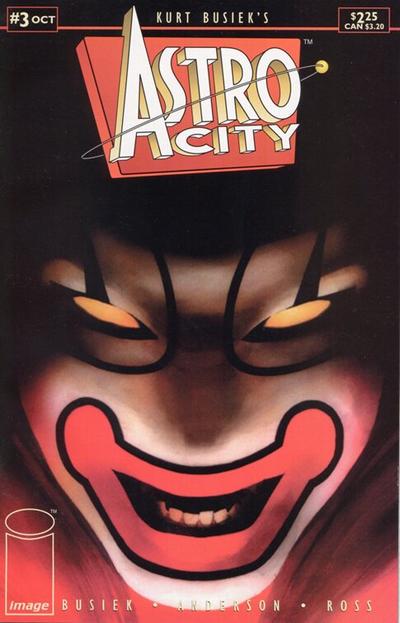
Alex Ross's Eisner Winning Covers
In the mid-nineties Alex Ross gained a lot of attention as an illustrator. His work on Marvels got him his first Eisner. His second came when he provided covers for Astro City.




Wednesday, April 28, 2010
Review - Krazy and Ignatz
Krazy and Ignatz
by George Herriman
2003, 2004 Eisner Winner for Best Archival Project
One of the fun things about taking up the hobby of collecting these award winning books for me is that on occasion it gives me an excuse to get something that I have wanted to try but never got around to getting. I've had a lot of curiosity about pre-1938 comics for a while as part of the history of comics but it's also been hard for me to justify picking up books containing them.
I had heard of Krazy Kat before but I had never seen a complete strip. I had only seen tiny ink line doodle like sketches of the characters. I knew that it was considered to be hugely influential but I didn't really know why. So I chose the 1929-1930 volume of the Krazy and Ignatz collections, each of which reprint the Sunday strips covering two years, and dove in with little expectations. And at first I was bewildered, then boggled, and finally amused as I caught onto the rhythms of Coconino County.
The concept of the strip is elegantly simple. Krazy is a dream-addled cat who is love with Ignatz. Ignatz is an angry mouse who loves throwing bricks at Krazy's head which Krazy takes as a sign of affection. Officer Pup is a dog who may love Krazy and does love putting Ignatz in jail for throwing bricks. Around and around the three of them go in their endless comedic cycle.
It's a simple structure but it is also effective. Once you grasp the cycle of love, violence, and justice that the three characters represent the cycle that they run in becomes entertaining. If it had just been pictures of Krazy in love with Ignatz followed by a brick to the head which ends in Ignatz in jail by Officer Pup then it would have quickly become dull. Instead the stories slide between the three of their viewpoints from Krazy's ignorance of Ignatz violence, Ignatz's complex schemes to obtain and throw bricks at Krazy, and Officer Pup's attempts to curtail that violence. It's astounding how much millage Herriman can get out these three characters.
The wordplay that Herriman uses is absolutely dizzying. While the jokes are typically slapstick or situational the dialog has its own odd cadence. Krazy speaks in a hard to decipher accent and captions read more like poetry than narration. This writing was the biggest barrier to my enjoyment of the strips since I wasn't certain if it was a joke I wasn't getting or just odd writing. Once I got into the swing of things and understood that it was just a bit more quirkiness I enjoyed it more.
Herriman's sketchy artwork looks like doodles you'd find in a notebook but I don't think this is a bad thing in this case. He consistently uses shifting, surreal backgrounds that reminded me of Theodore Geisel (a.k.a. Dr. Seuss) and no panel's background resembles the background of those surrounding it. For most of 1929 he used a tightly structured nine panel layout for the pages with the middle panel containing a cartoon that was separate from the rest of the strip. After this he starts exploring the space and layout more and by the end of 1930 is getting very creative with his layouts.
As an archive I thought that this book did a great job. It contains all of the Sunday strips for two years and in instances where the syndicate's misordering of pages harmed the pacing of the strips they are slightly rearranged. Each book in this series contains two years of material and they chose to start in the middle of the Krazy Kat run at what might be considered its artistic peak and have been working their way forward and backward from that point. It's also still ongoing which tells me that they've got a good chance of fully reprinting all of the material; if they stick to the printing schedule that Amazon has listed for preorders then they'll finish by next year. The reprints are clear and the book feels solid. My only complaint is that I'd rather have five years in a hard cover than two years in a paperback but that's a minor one.
I don't know if I'll get all of Krazy Kat but I will be getting a few more volumes of this archive. It's a work that by virtue of its simplicity still holds meaning eighty years later. It seems strange at first glance and it will still be strange even after you find yourself lost in it. But that strangeness goes from being a barrier to a comfort. This is a fine edition of a great comic strip.
by George Herriman
2003, 2004 Eisner Winner for Best Archival Project
One of the fun things about taking up the hobby of collecting these award winning books for me is that on occasion it gives me an excuse to get something that I have wanted to try but never got around to getting. I've had a lot of curiosity about pre-1938 comics for a while as part of the history of comics but it's also been hard for me to justify picking up books containing them.
I had heard of Krazy Kat before but I had never seen a complete strip. I had only seen tiny ink line doodle like sketches of the characters. I knew that it was considered to be hugely influential but I didn't really know why. So I chose the 1929-1930 volume of the Krazy and Ignatz collections, each of which reprint the Sunday strips covering two years, and dove in with little expectations. And at first I was bewildered, then boggled, and finally amused as I caught onto the rhythms of Coconino County.
The concept of the strip is elegantly simple. Krazy is a dream-addled cat who is love with Ignatz. Ignatz is an angry mouse who loves throwing bricks at Krazy's head which Krazy takes as a sign of affection. Officer Pup is a dog who may love Krazy and does love putting Ignatz in jail for throwing bricks. Around and around the three of them go in their endless comedic cycle.
It's a simple structure but it is also effective. Once you grasp the cycle of love, violence, and justice that the three characters represent the cycle that they run in becomes entertaining. If it had just been pictures of Krazy in love with Ignatz followed by a brick to the head which ends in Ignatz in jail by Officer Pup then it would have quickly become dull. Instead the stories slide between the three of their viewpoints from Krazy's ignorance of Ignatz violence, Ignatz's complex schemes to obtain and throw bricks at Krazy, and Officer Pup's attempts to curtail that violence. It's astounding how much millage Herriman can get out these three characters.
The wordplay that Herriman uses is absolutely dizzying. While the jokes are typically slapstick or situational the dialog has its own odd cadence. Krazy speaks in a hard to decipher accent and captions read more like poetry than narration. This writing was the biggest barrier to my enjoyment of the strips since I wasn't certain if it was a joke I wasn't getting or just odd writing. Once I got into the swing of things and understood that it was just a bit more quirkiness I enjoyed it more.
Herriman's sketchy artwork looks like doodles you'd find in a notebook but I don't think this is a bad thing in this case. He consistently uses shifting, surreal backgrounds that reminded me of Theodore Geisel (a.k.a. Dr. Seuss) and no panel's background resembles the background of those surrounding it. For most of 1929 he used a tightly structured nine panel layout for the pages with the middle panel containing a cartoon that was separate from the rest of the strip. After this he starts exploring the space and layout more and by the end of 1930 is getting very creative with his layouts.
As an archive I thought that this book did a great job. It contains all of the Sunday strips for two years and in instances where the syndicate's misordering of pages harmed the pacing of the strips they are slightly rearranged. Each book in this series contains two years of material and they chose to start in the middle of the Krazy Kat run at what might be considered its artistic peak and have been working their way forward and backward from that point. It's also still ongoing which tells me that they've got a good chance of fully reprinting all of the material; if they stick to the printing schedule that Amazon has listed for preorders then they'll finish by next year. The reprints are clear and the book feels solid. My only complaint is that I'd rather have five years in a hard cover than two years in a paperback but that's a minor one.
I don't know if I'll get all of Krazy Kat but I will be getting a few more volumes of this archive. It's a work that by virtue of its simplicity still holds meaning eighty years later. It seems strange at first glance and it will still be strange even after you find yourself lost in it. But that strangeness goes from being a barrier to a comfort. This is a fine edition of a great comic strip.
Subscribe to:
Posts (Atom)