
World's Finest
Written by Dave Gibbons; Art by Steve Rude
1991 Eisner Winner for Best Artist
For the past twenty-five years comic creators have built a mythology around Batman and Superman being opposite ends of the vigilante spectrum. It's easy to build some superficial comparisons but I've never been completely convinced by the argument. Still mixing the two of them together has resulted in a lot of fun over the years. World's Finest was one of the most significant mixing of the two characters in years when it was released. Unfortunately as an adventure story it's dense, impenetrable, and uninteresting. The writing's opposite number is the artwork which is superb.
This story doesn't make a lot of sense so bare with me. There's an orphanage opened halfway between Gotham City and Metropolis which is replacing an orphanage in both of those cities for some reason. The Joker and Lex Luthor buy the old orphanages for some reason. Then Luthor buys the Joker's orphanage in exchange for a Metropolis vacation. There's a subplot about a guy who taught orphans to be thieves thirty years ago that never amounts to anything other than a vague plot twist that completely lacks meaning. Superman goes to Gotham City to follow Luthor buying land there and Batman goes to Metropolis to see what the Joker's doing. No one actually does anything until the Joker and Luthor decide they can't stand the sight of each other any more at which point they start blowing things up.
Here's what I wanted going into World's Finest: Superman and Batman to have a big adventure in which they join forces to deal with a threat. I wasn't expecting anything brilliant, just an excuse for some fun. What I got was a lot of talking about an orphanage, a "threat" that consisted of a land grab and acting goofy on the street. The villains had no motivation or even a clear concept which made the heroes seem less important. The heroes are barely in contact with each other anyway as they spend three-quarters of the story apart as they investigate a plot that is so ephemeral it doesn't seem to exist. There's little action and what action can be found isn't interesting.
Gibbons also makes a half-hearted stab at exploring the characters without really doing anything. The villains get the worst of this as they come across as almost identical mafia dons. When there isn't a lot of difference in methodology between the Joker and Lex Luthor there's something very wrong with their characterizations. Superman and Batman are at least differentiated but there it seems Gibbons goes too far in the other direction. There's one comically bad scene toward the beginning where the two meet at a party and have to act exactly opposite of each other. It's just after midnight so Batman says "Good evening" while Superman says "Good morning" for example. It's about as ham fisted as you can get without having your extremities grafted from a pig.
So instead of dwelling on the story which I can't stand and could pick apart for hours I'm going to jump straight to Steve Rude. Rude is easily my favorite comic book artist due to his sense of design. He creates these whimsical spaces for characters to occupy that look incredible on the page. And the characters that Rude draws have a sleek look to them that I enjoy. In World's Finest Rude indulges in a golden age look to the setting which just makes the whole thing more stylized.
I don't recommend World's Finest (at least this version of World's Finest; there have been dozens of things to use the title for Superman/Batman team ups). It's not even good as a superhero comic. It's only saving grace is the artwork and I'd recommend looking for Rude's art elsewhere. I've read worse but not often.
Thursday, May 6, 2010
Tuesday, May 4, 2010
Review - Ex Machina
Ex Machina
Written by Brian K. Vaughn; Art by Tony Harris
2005 Eisner Winner for Best New Series
2005 Eisner Winner for Best Writer
There is a theory that superheroes are a product of a bygone era which is why superhero comics are in such a decline. I'm not sure I agree with that since they can still draw a crowd to movie theaters but it's hard to argue that the simplistic worldview that allows for superheroes is completely at odds with the world today. There have been many attempts to shift the superhero to something more modern and I haven't been satisfied with many of them. Ex Machina is an exception. The series and concepts are firmly tied to the first decade of the twenty-first century. It captures the zeitgeist of today with a link to past superheroes in a fascinating package.
Mitchell Hundred was a civil engineer who found a strange machine attached to the pylons of the Brooklyn Bridge. When he touched the machine it merged with his head granting Hundred the ability to control machines and an inherent understanding of mechanical systems. He built a jet pack tried to be a superhero but quickly realized he couldn't make a difference like that. So instead he went into politics. Fate played into his hands as the one great deed he managed to do as a superhero occurred on the day of the mayoral primary and Hundred was swept into office.
Ex Machina is about that term in office which we are immediately informed will end in disaster. Mayor Hundred deals with the complications of being an independent mayor with no political base, skeletons in his closet, the usual raft of problems that the mayor of a large city has to deal with, and the fallout from his brief career as a superhero. The series kicks off with a serial killer murdering sanitation workers, a controversial art exhibit, gay marriage, and someone who has a connection to his own abilities.
Handling politics in comic books (well any pop culture, really) is usually done very poorly. It's rare for a creator to not present one side (the side they agree with, of course) as paragons of rationality and goodness while the other side are vile, reactionary monsters who are cynically harming the innocents for their own benefit. Even when I agree with the positions of the creator I find that kind of demagoguery obnoxious. Vaughan avoids that in Ex Machina mainly by presenting all sides as people who believe that they're right and doesn't show that anyone against Mayor Hundred is a fool. The initial political storylines are mainly about social issues but as the series goes on the politics become more murky and Hundred has to make compromises. It's not the most realistic depiction of local politics but it's a good one.
The plot of the series is the real selling point. There are layers of mystery as the series opens with a brief scene after Hundred's term as mayor before flashing back to just after his inauguration. It sets a pattern where tiny fragments of the overarching picture are revealed in flashbacks before returning to the main story. What gave Hundred his abilities and what agenda is it part of? What terrible secret does he have that the governor wants to use against him? What happened during his time as a superhero? It should come as no surprise since Vaughan is one of the writer/producers on Lost that he is very good at tantalizing the reader with those mysteries.
And I wound up being just as interested in the cast. Part of that is that Hundred is a very nerd relatable character. He's an engineer trying to engineer solutions to social problems and not always succeeding. He tried to be a superhero and found out why someone getting powers and putting on a costume isn't well suited to actually being a hero.
Tony Harris is an interesting choice for telling this story. While I was fine with his artwork on Starman it didn't blow me away. That mixture of human drama and superhero action seems to have primed him for Ex Machina where he's much better. He can show the tight action scenes that wrap up in just a few pages and then keep the momentum in the next twenty pages of talking heads. This might not be the ideal book for an artist to show off but Harris does some nice work.
I liked Ex Machina a lot. It's a smart, interesting take on the mixture of superheroes and politics. Vaughan has created a post-modern superhero that isn't about wallowing in how miserable his life is or how stupid the idea of being a hero is. This is the story of how a superhero might not be able to do as much as a man can without knocking down what came before.

Sunday, May 2, 2010
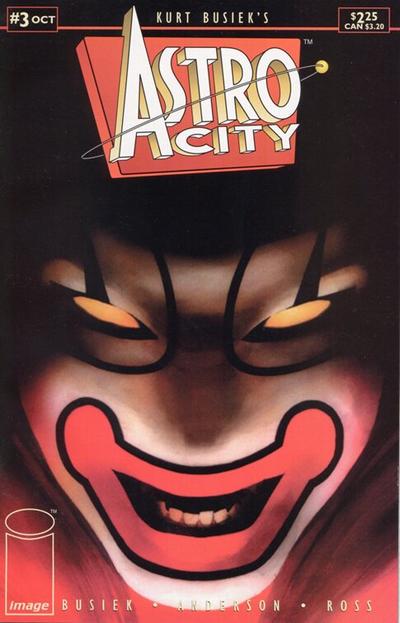
Alex Ross's Eisner Winning Covers
In the mid-nineties Alex Ross gained a lot of attention as an illustrator. His work on Marvels got him his first Eisner. His second came when he provided covers for Astro City.




Wednesday, April 28, 2010
Review - Krazy and Ignatz
Krazy and Ignatz
by George Herriman
2003, 2004 Eisner Winner for Best Archival Project
One of the fun things about taking up the hobby of collecting these award winning books for me is that on occasion it gives me an excuse to get something that I have wanted to try but never got around to getting. I've had a lot of curiosity about pre-1938 comics for a while as part of the history of comics but it's also been hard for me to justify picking up books containing them.
I had heard of Krazy Kat before but I had never seen a complete strip. I had only seen tiny ink line doodle like sketches of the characters. I knew that it was considered to be hugely influential but I didn't really know why. So I chose the 1929-1930 volume of the Krazy and Ignatz collections, each of which reprint the Sunday strips covering two years, and dove in with little expectations. And at first I was bewildered, then boggled, and finally amused as I caught onto the rhythms of Coconino County.
The concept of the strip is elegantly simple. Krazy is a dream-addled cat who is love with Ignatz. Ignatz is an angry mouse who loves throwing bricks at Krazy's head which Krazy takes as a sign of affection. Officer Pup is a dog who may love Krazy and does love putting Ignatz in jail for throwing bricks. Around and around the three of them go in their endless comedic cycle.
It's a simple structure but it is also effective. Once you grasp the cycle of love, violence, and justice that the three characters represent the cycle that they run in becomes entertaining. If it had just been pictures of Krazy in love with Ignatz followed by a brick to the head which ends in Ignatz in jail by Officer Pup then it would have quickly become dull. Instead the stories slide between the three of their viewpoints from Krazy's ignorance of Ignatz violence, Ignatz's complex schemes to obtain and throw bricks at Krazy, and Officer Pup's attempts to curtail that violence. It's astounding how much millage Herriman can get out these three characters.
The wordplay that Herriman uses is absolutely dizzying. While the jokes are typically slapstick or situational the dialog has its own odd cadence. Krazy speaks in a hard to decipher accent and captions read more like poetry than narration. This writing was the biggest barrier to my enjoyment of the strips since I wasn't certain if it was a joke I wasn't getting or just odd writing. Once I got into the swing of things and understood that it was just a bit more quirkiness I enjoyed it more.
Herriman's sketchy artwork looks like doodles you'd find in a notebook but I don't think this is a bad thing in this case. He consistently uses shifting, surreal backgrounds that reminded me of Theodore Geisel (a.k.a. Dr. Seuss) and no panel's background resembles the background of those surrounding it. For most of 1929 he used a tightly structured nine panel layout for the pages with the middle panel containing a cartoon that was separate from the rest of the strip. After this he starts exploring the space and layout more and by the end of 1930 is getting very creative with his layouts.
As an archive I thought that this book did a great job. It contains all of the Sunday strips for two years and in instances where the syndicate's misordering of pages harmed the pacing of the strips they are slightly rearranged. Each book in this series contains two years of material and they chose to start in the middle of the Krazy Kat run at what might be considered its artistic peak and have been working their way forward and backward from that point. It's also still ongoing which tells me that they've got a good chance of fully reprinting all of the material; if they stick to the printing schedule that Amazon has listed for preorders then they'll finish by next year. The reprints are clear and the book feels solid. My only complaint is that I'd rather have five years in a hard cover than two years in a paperback but that's a minor one.
I don't know if I'll get all of Krazy Kat but I will be getting a few more volumes of this archive. It's a work that by virtue of its simplicity still holds meaning eighty years later. It seems strange at first glance and it will still be strange even after you find yourself lost in it. But that strangeness goes from being a barrier to a comfort. This is a fine edition of a great comic strip.
Monday, April 26, 2010
Review - Astonishing X-Men
Astonishing X-Men
Written by Joss Whedon; Art by John Cassaday
2006 Eisner Winner for Best Continuing Series
2005, 2006 Eisner Winner for Best Penciler/Inker
The was once a time when I liked the X-Men quite a bit. Over time though the way the franchise became a bloated mess drove me away. The lack of anything vaguely resembling interesting stories helped keep me away. So a few years ago I was hearing from people like me that had become sick of the X-Men say that Grant Morrison had managed to make the series readable again. They were right; he did it by throwing out the accumulated baggage and bringing things back to the core themes. When Morrison left Marvel Comics thought they had the formula worked out to keep the re-energized franchise going and tried to catch lighting in a bottle for the second time by handing over their flagship franchise to Buffy the Vampire Slayer creator Joss Whedon. The result was something firmly average; not aggressively awful enough to be tossed aside but little more than a generic superhero comic.
In fact that is exactly how the run starts. There's a firm announcement that they've gotten away from that whole superhero thing and have to go back to it. And when I say announcement I don't mean that Whedon started out with them doing superhero things; they literally sit down and say, "We need to be superheroes again." And that sets down the themes for his stories. Lots of action, big threats, and high concepts that would look good on the movie screen. It's all shallow and without texture though.
The run opens with its high point. As the X-Men attempt to reform their image by acting as superheroes their cause is undermined by someone discovering what is in essence a cure for mutants. Since the reason for their existence is the promotion and protection of superpowered mutants this threatens to undermine their position and handling superpowers as a disease could change everything. And since this is a fairly complicated ethical issue in a comic that has announced its intention to be a superhero book again it turns out to be a plot by alien invaders, is resolved by punching some people a lot, and the complications that should have been created by a cure for mutants is quietly dropped.
After that first storyline it's all action all the time as they fight an evil computer, a mind controlling enemy, and aliens who to blow up the earth. These stories wind up being defined by who they fight rather than what the characters do. The one exception is in the mind control storyline where there are a few clever moments where some traditional characterization is subverted. It's not very clever but it is a step up from what is going on.
The characterization is a major part of my problem with Whedon's writing. He writes X-Men like he wrote Buffy (which is just like how he writes a lot of things when you get down to it). There's a lot of teen angst and romance which doesn't really fit with adult characters. You also have tough girls (I can't really call them women) including a new character who seems to exist solely to be the cute but tough new girl. If there's anything else to her I didn't see any evidence of it in the stories.
The absolute best thing about Astonishing X-Men is John Cassaday's art. He tends to draw well detailed figures but before simple backgrounds and consequently keeps the focus on the characters. This is a book that is dependent on the action sequences and Cassaday does a great job there in creating sequences that are easy to follow, well paced, and exciting to look at. This is a book that matches his talents and I enjoyed the visuals quite a bit.
I can't say I hated Whedon's writing on Astonishing X-Men. My feelings about it just don't rise to that level. Disappointed might be a better way to put it since there's nothing in the writing to distinguish it from any other superhero book on the shelf. Cassaday on the other hand did a stunning job with his artwork and for that reason I didn't mind reading it. I still wouldn't recommend it to anyone other that superhero fans and even there I'd say try a small sample of it first.
Saturday, April 24, 2010
Glen Farby's Eisner Winning Covers
In 1995 it was someone else's chance to win the Eisner award for best cover artist and Glen Farby stepped up. Farby was providing covers for the Garth Ennis Hellblazer run at that point though by this time I think he was losing steam on them. I preferred his more trippy covers from earlier on in the run though these are very nice as well:


Thursday, April 22, 2010
Review - Bizarro Comics
Bizarro Comics
2002 Eisner Winner for Best Anthology
Contains "Letitia Lerner, Superman's Baby Sitter"
by Kyle Baker
2000 Eisner Winner for Best Short Story
2000 Eisner Winner for Best Writer/Artist: Humor
Before I get lost in one of the stranger stories of the Eisners and the comic book industry I suppose I need to say something about the anthology itself. It is exactly what it says in the title: bizarro comics. DC unleashed a host of creators of independent comics on their iconic heroes and let them do zany things. It's quirky, off beat, and generally enjoyable showcase for these creators.
That done, let's get to the story of "Letitia Lerner, Superman's Baby Sitter".
In the late 1990's DC was publishing a line of anthology specials called 80-Page Giants. And "Elseworlds" was DC's identifier for stories that were not part of their ongoing stories and in which they usually did some kind of high concept twist on the original (Batman is a vampire, Superman is a communist, and so on). So Elseworlds 80-Page Giant was an anthology where they put a different spin on the characters.
For this anthology Kyle Baker wrote and drew "Letitia Lerner, Superman's Baby Sitter" in which an infant Superman causes comedic havoc for his babysitter. He constantly stumbles into apparently dangerous situations like falling asleep in the middle of a freeway which require her to rush in to save him. The last panel featured the baby cheerfully sitting in a microwave.
This was a step too far for DC publisher Paul Levitz. He ordered the story pulled from the issue but there was one tiny problem with that: he saw the story and ordered it pulled after the comic had been printed. A few thousand copies had already been shipped to the U.K. and a handful of copies got around to people in the U.S. but the rest were pulped less than a week before it was set to reach comic shops.
Word quickly got around and the few copies that were out there were in high demand. People wanted to see the story that DC decided to destroy. It was a massive embarrassment for them and I strongly suspect that was the reason a comic that was not available in any form to the vast majority of the public won two Eisner awards.
Which isn't to say it's a bad story. It's a lot of fun, had me amused the whole time, and demonstrated Kyle Baker's incredible skill at comedy. The escalating dangers of the baby rushing off and his babysitter chasing afterward has been used in a lot of cartoons but somehow having the baby be indestructible just makes it more amusing. I just suspect that it wouldn't have won if it was not for the controversy drawing attention to it.
So as this controversy raged DC comics decided that they needed to publish "Letitia Lerner, Superman's Baby Sitter" after all but there wasn't a good place for it with their current books. So they came up with the idea of an anthology book featuring similarly odd and humorous stories and they titled it Bizarro Comics which brings us back full circle.
Since Bizarro Comics is such a diverse anthology it's hard to pin down. There's twenty-six stories in this book. The longest is the framing story in which the villains Mr. Mxyzptlk the cartoonish imp and Bizarro the backward Superman have to play games against a rules obsessed universe conqueror. This would have been an entertaining comic on its own. Other highlights for me include an Aquaman adventure in a bathtub, Batman getting an inferiority complex after trying to help Superman, and a child sneaking into the Batcave. I can't single out a single story that I disliked though I did find many of them to just be too abrupt which was due to the short story format. The only downside that I can find is that many of the stories are dependent upon the reader being familiar with the character; if you don't know the Metal Men then the story about them disguising themselves as human to go to a nightclub will be less comprehensible.
Bizarro Comics is a good anthology. It's diverse, features a lot of great stories, and showcases a lot of comic book creators who just don't get much attention. I recommend it with the caveat that if you aren't at least generally familiar with superheroes then it won't make any sense.
Subscribe to:
Posts (Atom)